




Children’s dental health is a fundamental pillar of overall well-being, playing a decisive role in their physical and social development. The practice of good oral hygiene habits from an early age not only protects primary teeth but also ensures that permanent dentition develops in a healthy and balanced manner.
Although temporary, primary teeth are of crucial importance. They are essential for proper speech development, enable effective chewing, and contribute to the correct positioning of permanent teeth. Their preservation is therefore indispensable in preventing future problems that may affect oral health and a child’s quality of life.
Effective prevention begins at home, with the support and supervision of parents. It is their responsibility to encourage and guide the child in adopting a daily oral hygiene routine, fostering habits that will last a lifetime. This prevention should be complemented by regular visits to a paediatric dentist, who can monitor dental development and intervene early whenever necessary.
Maintaining a consistent oral hygiene routine is essential in preventing the formation of carious lesions, one of the most common diseases in childhood. The main cause of these lesions is dental plaque, a film that accumulates on the teeth and produces acids capable of eroding dental enamel. Without proper cleaning, this process can progress rapidly, compromising dental health.
Good oral hygiene enables the effective removal of dental plaque and reduces the risk of carious lesions. To achieve this, proper toothbrushing at least twice a day is essential, along with the use of dental floss and fluoride toothpaste appropriate for the child’s age. Fluoride plays an important role in strengthening dental enamel, making it more resistant to acid attacks.
Thus, by promoting adequate oral hygiene, parents actively contribute to the prevention of carious lesions in their children’s teeth, ensuring a solid foundation for long-term oral health. Investing in education and care from an early age is essential for children to grow up with healthy habits and a strong, protected smile.
0 – 3 Years
In the first years of life, oral hygiene should begin even before the eruption of the first teeth, by cleaning the gums with a damp gauze or an appropriate finger brush. After the eruption of primary teeth, brushing should begin using a soft toothbrush and a small amount of fluoride toothpaste (1000 ppm F), approximately the size of a grain of uncooked rice. Brushing should be carried out by parents at least twice a day, ensuring gentle and effective cleaning. Whenever two teeth are in contact, dental floss should also be introduced carefully with parental assistance.
4 – 10 Years
At this stage, children begin to gain autonomy, but parental supervision remains essential. Teeth should be brushed at least twice a day, using a pea-sized amount of fluoride toothpaste (1400 ppm F). The use of dental floss is also important, especially when teeth are in contact. Parents should ensure that the brushing technique is correct and that all tooth surfaces are properly cleaned.
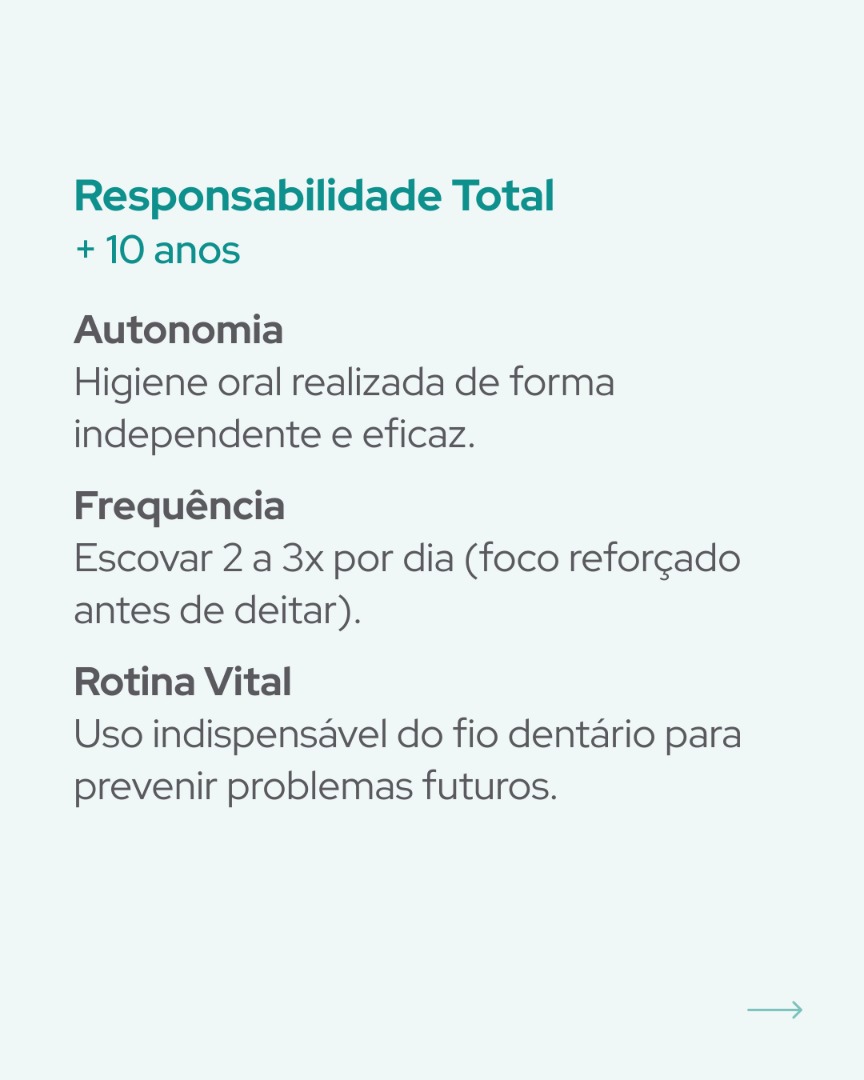
+10 Years
From the age of 10 onwards, children should be able to perform their oral hygiene independently and effectively. Brushing should continue two to three times a day, with particular attention given to brushing before bedtime. Daily use of dental floss becomes essential. At this stage, it is important to reinforce personal responsibility and the importance of maintaining good habits to prevent future problems.
Dra. Carla Caldeira Silva (OMD 13315)
19, May 2026